Authority outside the model.
The system proposing an action cannot create or activate the authority used to approve itself.
SPQR Technologies
SPQR builds the authority chain from regulatory obligation and organisational policy to governed workflows, runtime enforcement and evidence that survives scrutiny.
Why SPQR exists
AI agents can propose, reason and act at machine speed. The authority to approve those actions must remain independent, explicit and inspectable.
Proposal ≠ authority · context ≠ control · logs ≠ preventionOne company. One governed chain.
The products sit at different control points, but they solve one connected problem: turning regulatory expectation into approved organisational authority, then making that authority operational.
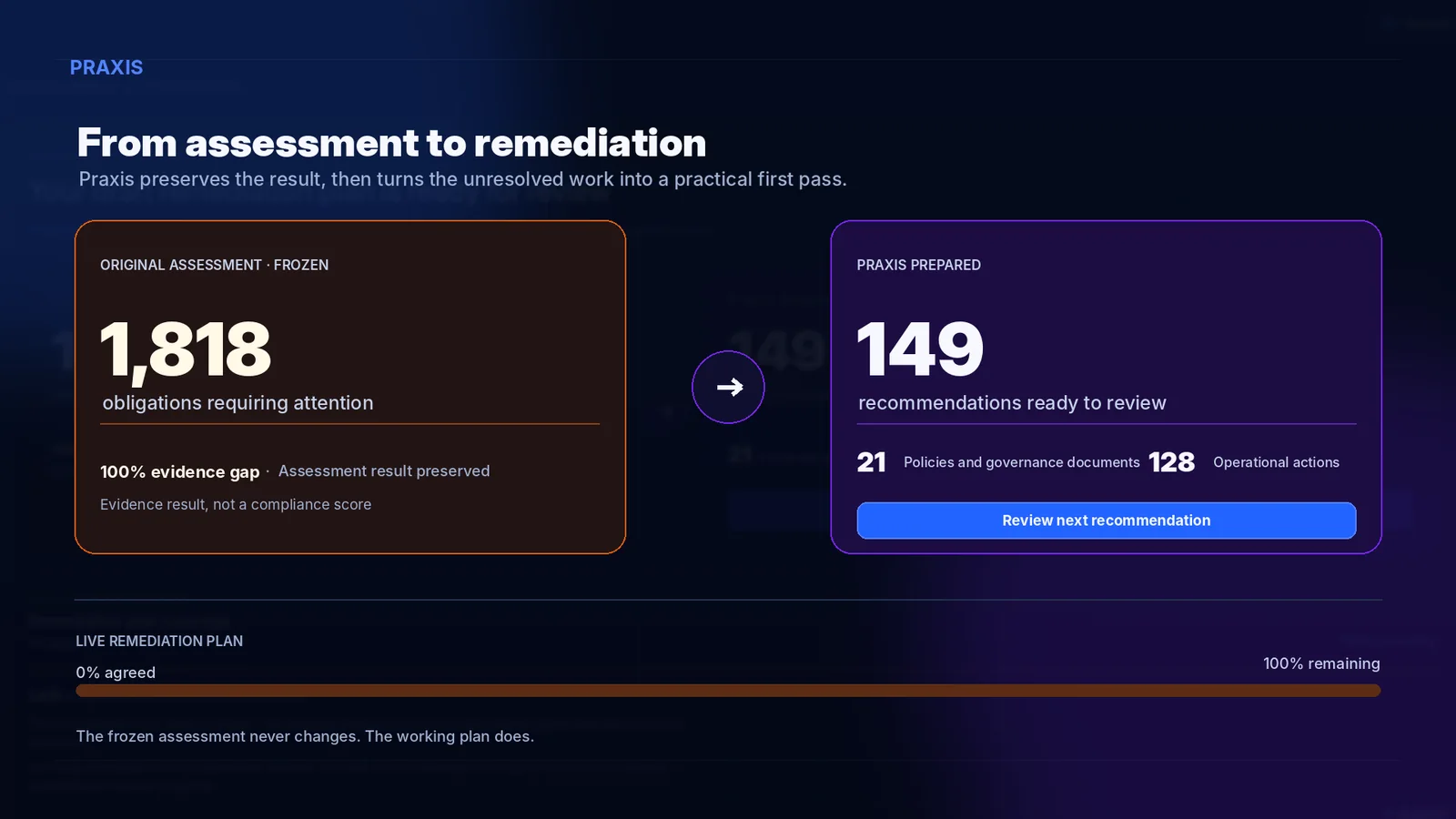
Assess organisational evidence against the assigned regulatory baseline, preserve the basis for every finding and turn unresolved obligations into an agreed remediation plan.
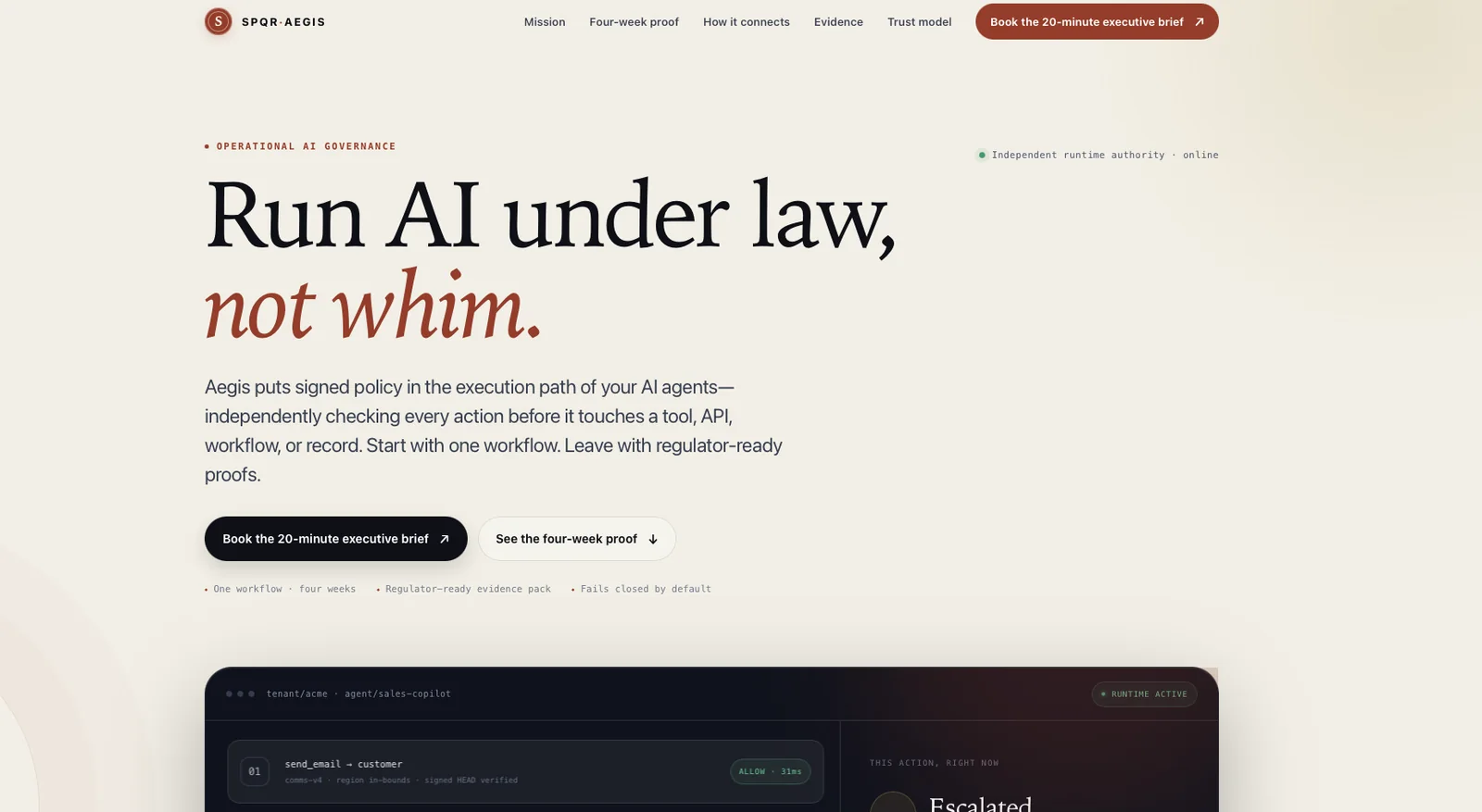
Independently verify the active authority before execution, then preserve a receipt showing what governed the action and what effect occurred.
The design rules
These are not brand values pinned to a wall. They are constraints that shape how the products are designed and what they are allowed to claim.
The system proposing an action cannot create or activate the authority used to approve itself.
Ambiguity, missing evidence and conflict remain legitimate outcomes rather than being compressed into a reassuring score.
The integrated enforcement point must hold governed actions without valid authority, mapping or scope. A separate unmediated path remains outside that control.
Review, change and runtime verdicts should leave an inspectable chain, not a reconstructed narrative after the fact.
The people in the room
Two founders, different remits. Adam leads product, regulatory architecture and research. Misha leads engineering delivery, operations, enterprise implementation and partnerships.
Meet both founders and their responsibilitiesAdam leads product direction, regulatory architecture, public research and early enterprise design partnerships, connecting policy authority to operational governance.
Own the what and why: product architecture, the evidence model and the questions worth testing with real workflows.
Misha leads engineering delivery, technology and operations, partner channels, commercial management and enterprise implementation. She brings more than 20 years of technology and governance programme delivery.
Own the how: delivery, engineering execution, operational change and partnerships that make the controls usable.
Research-led engineering
SPQR publishes technical and jurisprudential work on action-boundary control, cryptographic policy enforcement, constitutional authority, verifiable trust and governed improvement.
Accountability before procurement
SPQR Technologies is based in Melbourne, Australia. Adam Mazzocchetti is the founder contact for product, research and initial engagements. Current founder roles and biographies are shown above.
Review the ISO and SOC assurance statements, then request the applicable entity, covered services and current documents.
Review trust informationPapers are labelled by source and publication status. A controlled research result is not a blanket claim about deployment outcomes.
Inspect bounded evidenceConfirm the contracting SPQR entity, deployment region, support, retention and commercial terms before an engagement.
Ask the right questionOne clear next step
Policy scope, execution authority or research methods: start with the question you actually need answered.
One workflow. Defined scope. A decision about fit.